Make a Full, Committed Swing Without Wondering How Your Back Will Feel Tomorrow
Move Better. Feel Better. Live Better.
The first tee shot you ease into. The turn that feels shorter than it used to. The drive home where your lower back reminds you about the last nine. You don't need a new driver or another swing tip. You need a body that can make the swing you already know.
Designed by a Physical Therapist • 30-day money-back guarantee
 Hips + mid-back. One clear plan.
Swinging Easy on the First Tee? Feeling the Round in Your Back on the Drive Home?
Golf asks a lot of a body: a full turn back, a fast turn through, and a balanced finish, over and over for four or five hours. Most golfers work hard on their swing and very little on the body that makes it. That's usually where the trouble starts.
A Turn That Got Shorter Without You Noticing
Stiff hips and a stiff mid-back cut your backswing short. You still want the full turn, so your lower back twists more to find it. That's a job it isn't built for.
Distance That Quietly Slipped Away
Power is strength applied quickly, and it fades fastest with age. Without training it, clubhead speed drifts down a little each season, and you start reaching for one more club.
Holding Back Instead of Committing
You swing at 80% to protect your back. You skip the range session. You think twice about the extra nine. None of it feels like a big decision, but it changes how much you enjoy the game.
"I didn't realize how much I'd been guarding my swing until I stopped."
What the Research Says About a Golf-Ready Body
The good news: golf is good for you, and the body behind your swing responds to training at any age.1
Your Golf Swing Is a Team Effort, and Each Joint Has a Job
Some joints are built to turn. The ones between them are built to stay steady. A smooth, powerful swing happens when each one does its own job.
Mobile joints share the turn. Stable joints pass the energy through.
Hips and mid-back: the turners
Built to rotate. When they move freely, they share the turn back and through, so your swing feels full and easy.
Lower back: the steady link
Built more for stability than twisting. Golfers with back pain tend to have less rotation in their lead hip, and reviews link back trouble to over-rotating through the spine.4,5
Legs and core: the foundation
Power starts from the ground. Strong legs push into the turf while a steady core passes that energy up to your arms and the club.
Flexibility alone isn't the answer. A 2024 analysis found explosive power had the strongest links to clubhead speed, while flexibility on its own did not.8 That's why Swing Strong frees up your turn first, then builds strength, control, and speed on top of it.
Four Pillars of a Golf-Ready Body
Mobility
Free up your hips and mid-back so your turn comes from the right places.
Strength
Legs, hips, upper back, and grip for a stable base and steady posture.
Control
A core that holds steady from the first tee to the last putt.
Power
Teach your body to move quickly again, the missing piece for clubhead speed.
Here's What Golfers Notice First
- A fuller, freer turn back and through, from your hips and mid-back
- Committing to your swing on the first tee instead of easing into it
- A back that feels better after 18 holes, and the morning after
- More clubhead speed from a body that can move quickly again
- Steadier posture and balance late in the round
- A simple routine that fits around your golf season
Go at your own pace • Designed by a Physical Therapist


Created by a Physical Therapist With 26 Years in the Field
"Better movement changes everything. And it's never too late to start."
Hi, I'm David. For the past 26 years I've helped thousands of people get past stiffness, pain, and fear of movement, from professional athletes chasing performance to everyday golfers who just want to enjoy their weekend round. I'm a Physical Therapist, Certified Strength and Conditioning Specialist, and TPI-certified movement expert.
Here's what I see with golfers over and over: the swing isn't the problem. The body behind it has lost some turn, some strength, and some speed. Get the hips and mid-back moving, build a steady base, then add speed, and the swing you already know starts to show up again.
Simple. Guided. At home. No guesswork.
David Hawkins, PT, CSCSFounder, Movement Answers
Swing Strong: Your 12-Week Path to a Freer, Stronger, Faster Swing
Start gently, build steadily, then add speed. Each phase builds on the one before, so by week 12 you're stronger, moving better, and swinging with more confidence.
Five quick checks, about five minutes, to find your stiffest areas.
Workout A and Workout B, 30–40 minutes each, laid out in order.
Recheck at weeks 6 and 12, and pay attention to your swing.
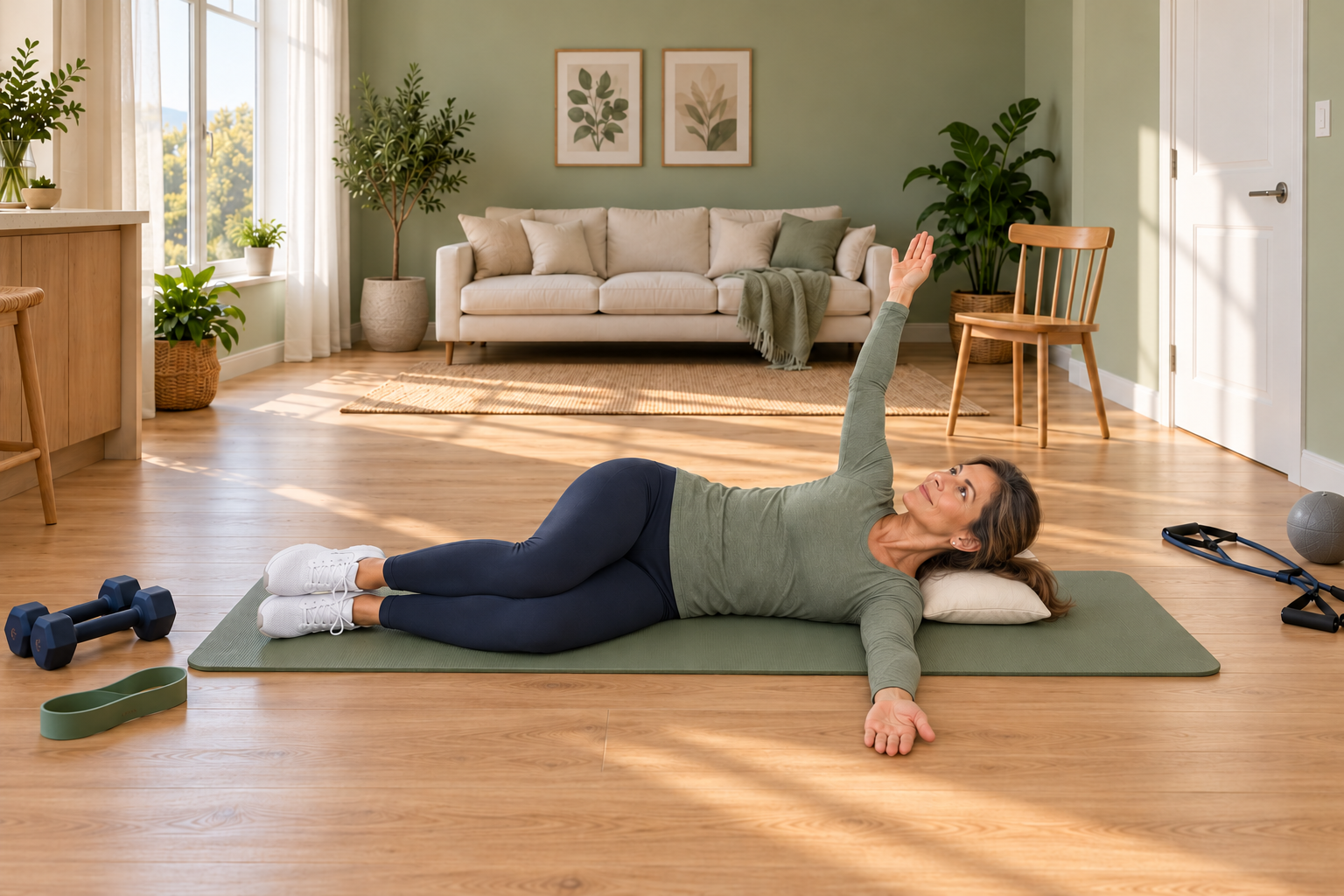
Build Your Base
Learn each move well. Free up your turn and build steady strength at a moderate effort.
- 2 workouts a week, alternating A and B
- Mobility warm-up every session, plus a 10-minute flow on other days
- No power work yet, just good form
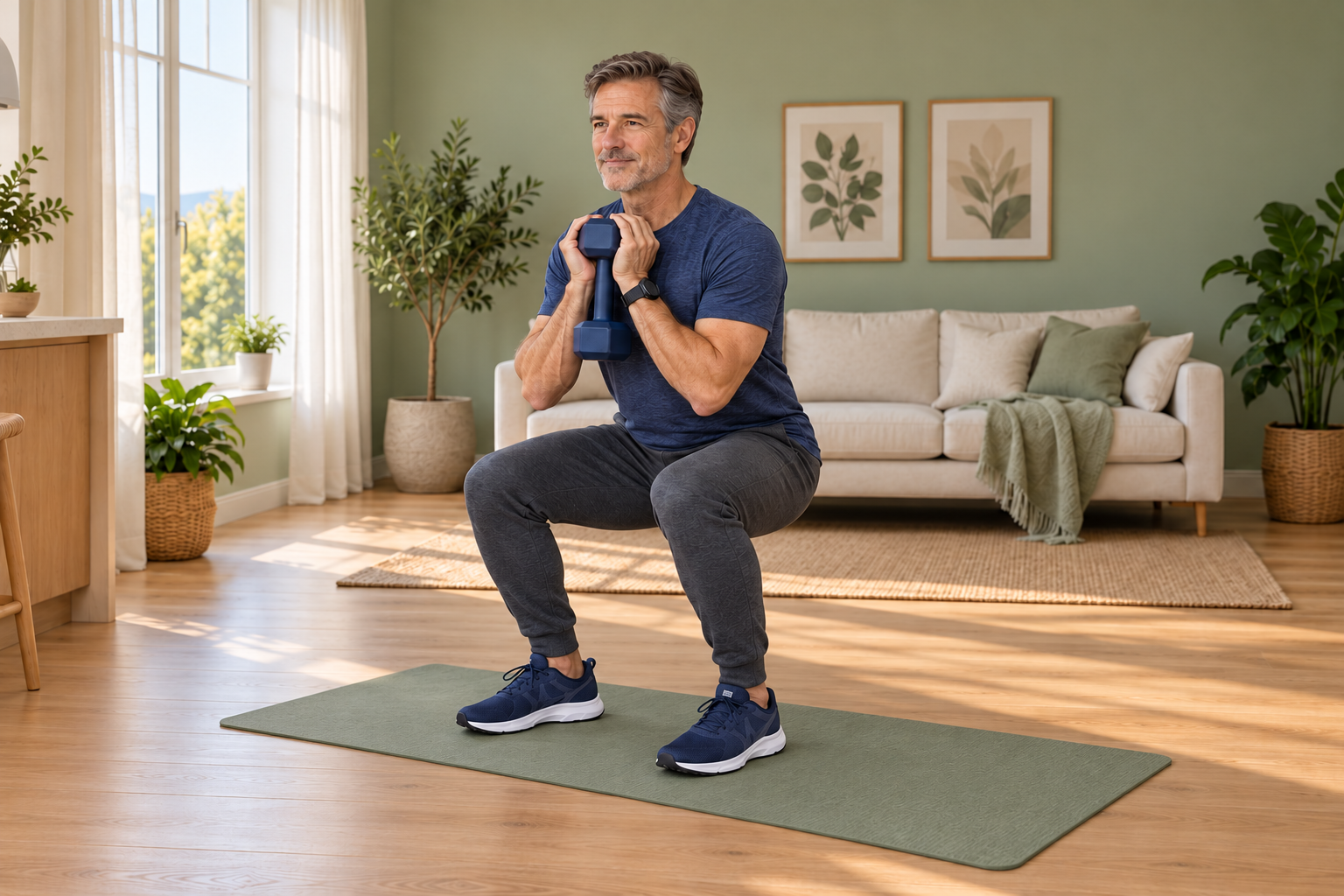
Get Stronger
Add a set to the main strength moves and introduce the power block at an easy-to-moderate effort.
- 2–3 workouts a week
- Power block added at 2 sets
- Retest your Self-Check at week 6
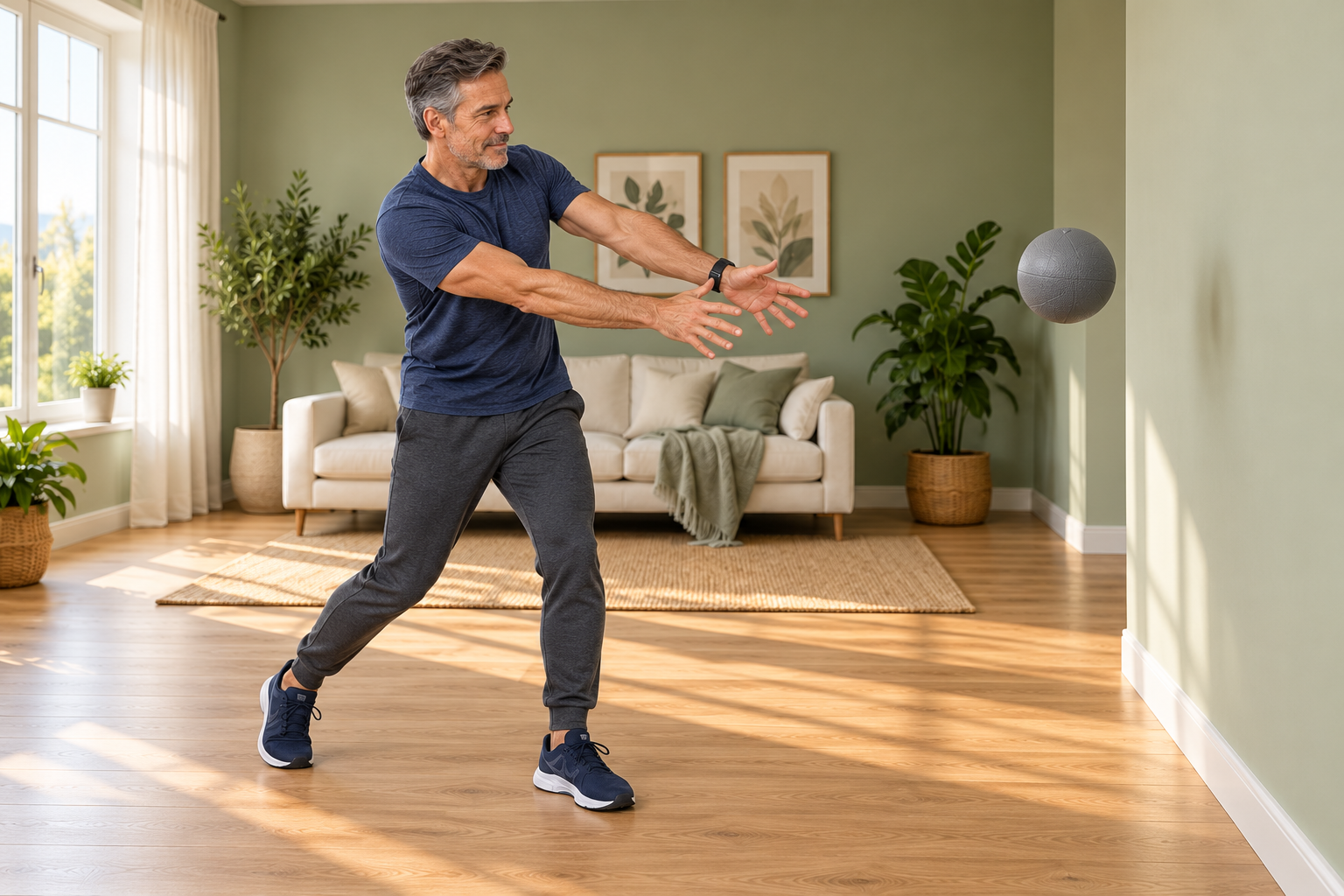
Add Speed
Power moves come first while you're fresh. Strength goes a little heavier if your form is smooth.
- 3 sets of quick, crisp power reps
- Strength at 6–8 reps
- Final retest at week 12
| A SAMPLE WEEK | MON | TUE | WED | THU | FRI | SAT | SUN |
|---|---|---|---|---|---|---|---|
| Weeks 1–4 | A | Flow | — | B | — | Golf | Flow |
| Weeks 5–12 | A | Flow | B | — | A | Golf | Walk |
A = Squat, Push & Pull · B = Hinge, Carry & Turn · Flow = the 10-minute mobility routine. After week 12, keep 1–2 workouts a week in season.
2–3 sessions a week • Physical-therapist designed
Everything You Get Inside Swing Strong
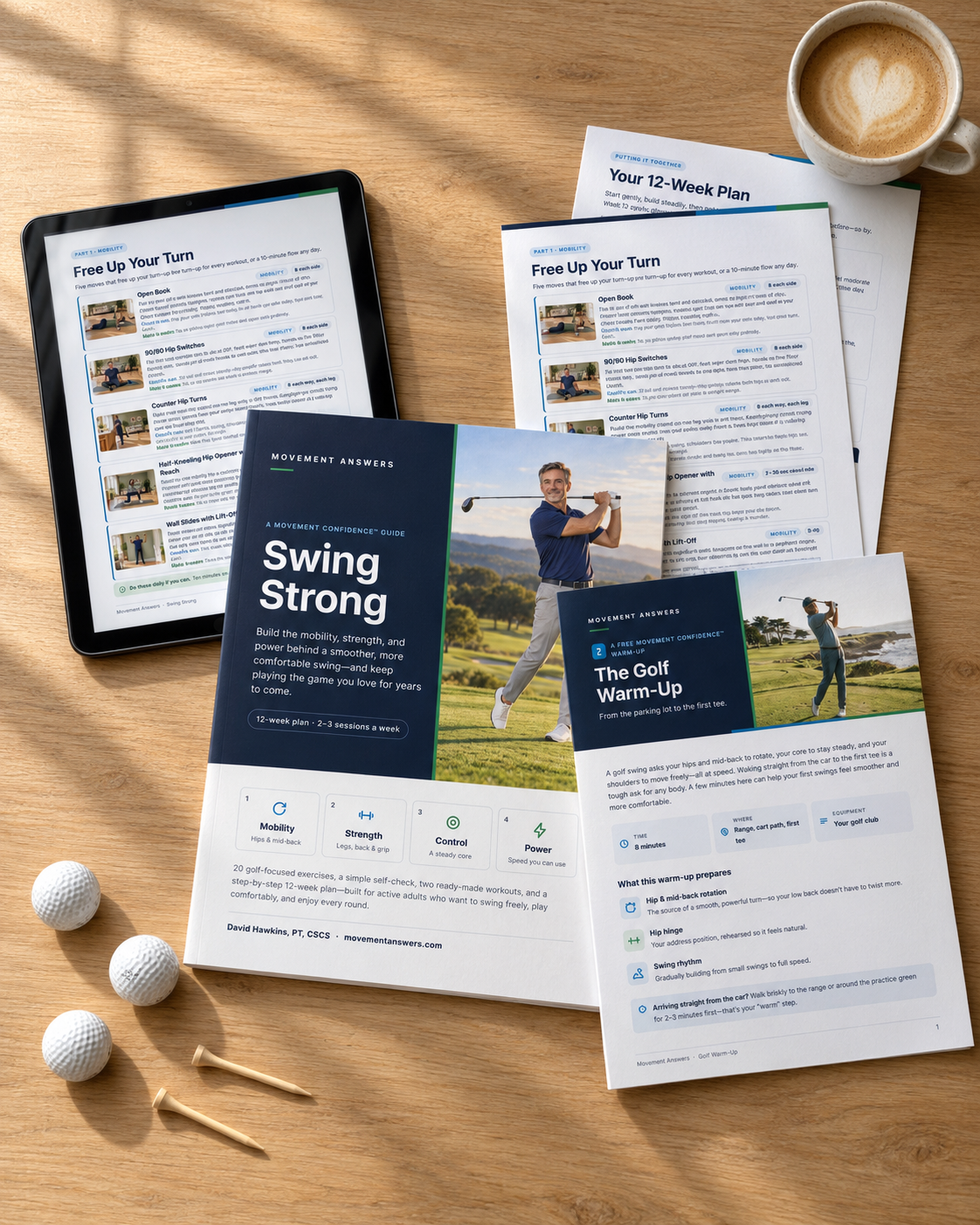
20 Golf-Focused Exercises
20 golf-focused exercises across mobility, strength, control, and power, each with a coach's cue plus easier and harder options.
Your 12-Week Plan + Two Ready-Made Workouts
Three phases and two 30–40 minute workouts, laid out in order so you always know what to do next.
The Golf Movement Self-Check
Five quick checks to find your focus areas, with a retest at weeks 6 and 12.
The Swing Strong Tracker
Log every session, your Self-Check results, and on-course numbers like 7-iron distance.
Training Around Your Golf
How to fit training into your off-season, your golf season, and the days before a round.
Listen as You Train: Traffic-Light Check
A simple green, yellow, red system for knowing when to push, adjust, or stop.
The Golf Warm-Up & Cool-Down
A separate guide: an 8-minute routine from the parking lot to the first tee, plus a 4-stretch cool-down.
Start Swing Strong — Get Instant Access
- ✓ 30-day money-back guarantee
- ✓ No gym needed
- ✓ Print it or use it on your phone
What Makes This Different
Is This the Right Next Step for You?
Right for you if you…
- Love golf and want to keep playing comfortably for years
- Feel stiff in your turn or notice your distance slipping
- Feel your lower back after a round or a range session
- Want a clear plan instead of random gym exercises
- Can set aside 30–40 minutes, 2–3 times a week
Not for you if you…
- Have a recent injury, surgery, or unexplained pain. Please see a physical therapist or physician first
- Want swing lessons. This trains your body; a golf instructor helps you use it
- Expect results without showing up consistently
- Are looking for a quick fix instead of a habit that lasts
Instant access • One-time purchase • Keep it for life

Try It Risk-Free
Swing Strong comes with a 30-Day Satisfaction Guarantee. If you're not completely satisfied, contact us within 30 days for a full refund. No questions asked.
Frequently Asked Questions
What equipment do I need?
A pair of light-to-moderate or adjustable dumbbells, a loop band, a long band with handles, a sturdy chair, and your golf club. A light medicine ball (4–6 lb) is helpful but optional, and every power move has a no-ball option.
I'm over 60. Is strength and power training safe for me?
For most adults, yes, when it starts gently and builds gradually. Expert guidelines support resistance training for older adults, including faster, power-focused movements.14 Phase 1 has no power work at all, and every exercise has an easier option.
I already have some back pain. Should I wait?
Not necessarily. The right exercise is often part of feeling better, but it should be guided. Have a physical therapist look at your back first, start with the easier options, and keep every exercise in the green zone. If your back is the main concern, our 21 Day Back Pain Answers program may be a better place to start.
How long does each session take?
About 30–40 minutes, including a 6-minute warm-up. Short on time? Do one set of everything. Something always beats nothing.
When will I notice a difference?
Many people feel looser within a couple of weeks. In research, gains in strength and swing speed usually showed up after about 8 weeks of consistent training.9–11 Your Self-Check retests at weeks 6 and 12 help you see the change.
Can I do this during golf season?
Yes. The off-season is the best time for the full 12 weeks. During the season, keep 1–2 workouts a week to hold your gains and skip heavy leg work the day before a round.
How do I get it?
Swing Strong is a digital guide you can download right after checkout. Use it on your phone or tablet, or print it.
What happens after week 12?
Keep 1–2 workouts a week in season and run the full plan again each off-season. When you're ready for ongoing support, you'll be invited to the Movement Confidence Membership™, with ongoing programming, coaching, and community. Week 12 is a starting point, not the finish line.
Ready to Swing Freely and Enjoy Every Round?
Move Better. Feel Better. Live Better. Your 12 weeks start today.

Designed by a Physical Therapist • 30-day guarantee